
Blog
The Truth About Watering Plants Before Winter
Nov
November has arrived in Massachusetts, the leaves are falling, and our gardens are getting ready for their winter rest. With the summer heat behind us and cooler temperatures settling in, you might think it’s finally time to put away the watering can.
But not so fast! Your plants may still be thirsty!
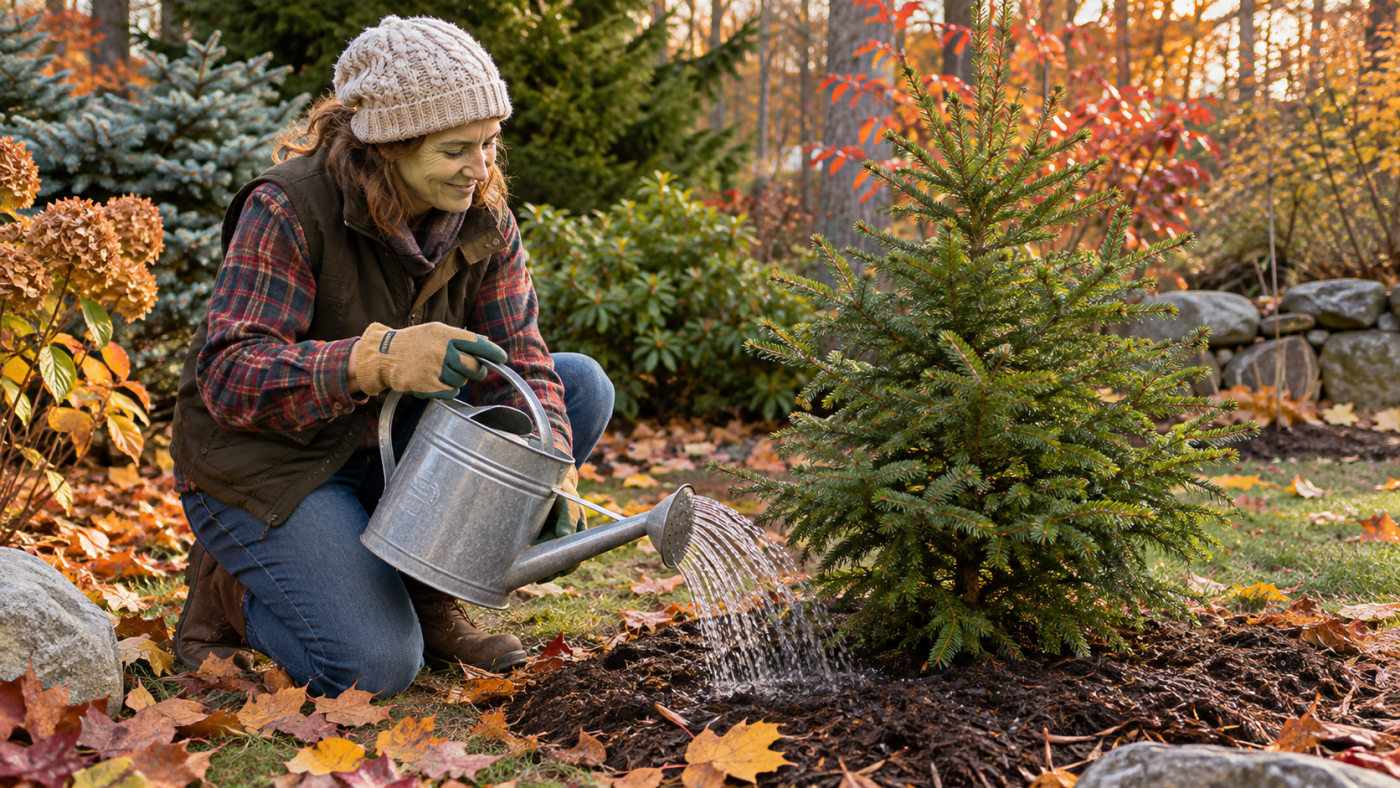
One of the biggest misconceptions about fall gardening is that cooler weather means plants no longer need water. In reality, proper watering before winter can make a big difference in how well your trees, shrubs, and evergreens handle the colder months ahead.
Let’s discover why a little extra attention now can lead to a healthier, more beautiful garden next spring!
Cooler Weather Doesn’t Always Mean Moist Soil
It’s easy to assume that because the air feels cool, the ground must have plenty of moisture.
Unfortunately, that’s not always the case!
Fall can bring extended dry periods, and soil can become surprisingly dry even when temperatures are chilly.
Windy days, limited rainfall, and well-drained soils can all contribute to moisture loss.
Here in the Framingham area, November weather can be unpredictable. A stretch of rainy days may provide plenty of moisture, while several dry, breezy weeks can leave your plants needing a good drink.
The key is to check your soil rather than relying on the temperature alone.
Why Watering Before Winter Matters
Although many plants are slowing down above ground, their roots can remain active while soil temperatures are favorable.
Adequate soil moisture helps trees and shrubs prepare for winter and reduces stress as temperatures drop.
Once the ground freezes, roots have a much harder time absorbing water. If plants enter winter already stressed from dry conditions, they may be more vulnerable to winter damage.
This is especially important for newly planted trees and shrubs that haven’t had enough time to develop extensive root systems.
A little extra care before the ground freezes can help protect your landscape investment!
Newly Planted Trees and Shrubs Need Extra Attention
Did you plant a new tree or shrub this year?
If so, don’t forget about it just because the growing season is winding down!
Newly planted trees and shrubs need consistent moisture while their root systems become established.
Unlike mature plants, their roots haven’t spread far enough into the surrounding soil to access additional water.
Pay particular attention to:
- Newly planted shade and ornamental trees.
- Flowering shrubs and landscape hedges.
- Recently transplanted plants.
- Trees and shrubs growing in exposed locations.
- Plants in raised beds or fast-draining soils.
Gardening tip: Check moisture within the original root ball, not just the surrounding garden soil. Newly planted root balls can dry out even when nearby soil feels moist.
Evergreens Are Especially Vulnerable to Winter Drying
Evergreens provide beautiful color and structure throughout the year, but they’re not immune to winter stress.
Unlike deciduous trees that drop their leaves, evergreens retain their needles or foliage throughout winter.
They continue losing small amounts of moisture through their leaves and needles, even during colder weather.
When the ground freezes, roots may be unable to replace that lost water.
The result can be a condition called winter burn.
What Is Winter Burn?
Winter burn occurs when evergreen foliage loses more moisture than the roots can absorb.
This can cause needles or leaves to turn brown, bronze, or appear dried out, with damage often becoming noticeable in late winter or early spring.
Plants that may be affected include:
- Arborvitae
- Rhododendrons
- Boxwoods
- Hollies
- Yews
- Pines and spruces
Newly planted evergreens and those exposed to strong winter winds or afternoon sunshine are particularly vulnerable.
Making sure evergreens have adequate soil moisture before the ground freezes is one of the simplest ways to help reduce winter burn.
How to Tell If Your Plants Need Water
Before reaching for the hose, check the soil!
Watering when the ground is already wet can be just as harmful as letting plants become too dry.
Try the Simple Soil Test
Use a small garden trowel to check the soil approximately 4 to 6 inches below the surface, being careful not to disturb roots.
Dry and crumbly? Your plants may need water.
Cool and slightly moist? They’re probably doing just fine.
Wet and soggy? Hold off on watering and allow the soil to drain.
For newly planted trees and shrubs, gently check moisture deeper within the root ball when possible.
Remember, sandy soils generally dry out faster than heavier clay soils.
The goal is moist, well-drained soil, not saturated soil!
Five Smart Fall Watering Tips
A few simple habits can help your landscape head into winter in better shape.
1. Water Deeply and Slowly
A quick sprinkle may wet the soil surface without reaching the roots.
Instead, allow water to soak slowly and thoroughly into the root zone. A soaker hose or gently running garden hose can help deliver moisture where it’s needed.
2. Pay Attention to Rainfall
Autumn rain can reduce the need for supplemental watering, but don’t assume one rainy afternoon is enough.
Check soil moisture around trees and shrubs after extended dry periods.
3. Give New Plantings Priority
Newly planted trees, shrubs, and evergreens should be at the top of your fall watering checklist.
Their developing root systems make them particularly sensitive to dry conditions.
4. Add a Protective Layer of Mulch
A 2 to 3-inch layer of organic mulch can help conserve moisture and moderate soil temperatures.
Shredded bark and wood chips are excellent choices. Just remember to keep mulch several inches away from trunks and stems.
5. Continue Until the Ground Freezes
Keep monitoring soil moisture during dry fall weather while the ground remains unfrozen.
Once the ground freezes, regular watering is no longer practical.
And don’t forget to disconnect and drain outdoor hoses before freezing temperatures arrive!
Can You Overwater in Fall?
Absolutely!
While dry conditions can stress plants, too much water can damage roots by limiting the oxygen available in the soil.
Poor drainage, constantly saturated soil, and unnecessary watering can all contribute to root problems.
That’s why it’s important to check moisture before watering rather than following a rigid schedule.
Every landscape is different, and watering needs depend on plant size, soil type, recent rainfall, and weather conditions.
A Healthier Spring Garden Starts Now!
It’s tempting to think gardening season ends when the leaves begin to fall, but a little attention in November can make a big difference when spring arrives.
By checking soil moisture, watering newly planted trees and shrubs when needed, and giving evergreens extra attention, you can help your landscape withstand winter’s challenges.
Have questions about getting your garden ready for winter?
Stop by Fran’s Flowers in Framingham, MA! Our friendly team is happy to help you explore seasonal plant care supplies and offer advice for keeping your landscape healthy through the changing seasons.
Don’t let your garden go into winter thirsty. A little water now can bring beautiful rewards next spring!