Blog
5 Perennials That Shine in the Fall Garden
Sep
Fall doesn’t mean the end of garden color. In fact, some perennials are just reaching their peak as summer begins to wind down. For Massachusetts gardeners, fall-blooming perennials can refresh tired beds, fill gaps in the landscape, and provide valuable late-season food for pollinators.
From bold flowers to graceful grasses, here are five perennial favorites that can keep the garden looking beautiful well into the season.
1. Sedum
Sedum is a fall garden favorite for good reason. Upright varieties develop clusters of flowers that deepen in color as the season progresses, bringing beautiful texture to beds and borders.
Sedum is also attractive to bees and butterflies looking for late-season nectar.
Why we love it:
- Long-lasting fall flowers
- Excellent texture and structure
- Attractive to pollinators
- Performs well in sunny locations
- Dried flower heads provide winter interest
Leave the spent flower heads standing after bloom for added texture in the winter garden.
2. Asters
Few flowers say fall quite like asters. Their masses of daisy-like blooms bring shades of purple, blue, pink, and white to the landscape when many summer perennials are beginning to fade.
Asters are also an important late-season nectar source for bees, butterflies, and other pollinators.
Plant them in sunny borders, cottage gardens, or pollinator beds where their fall color can really stand out.
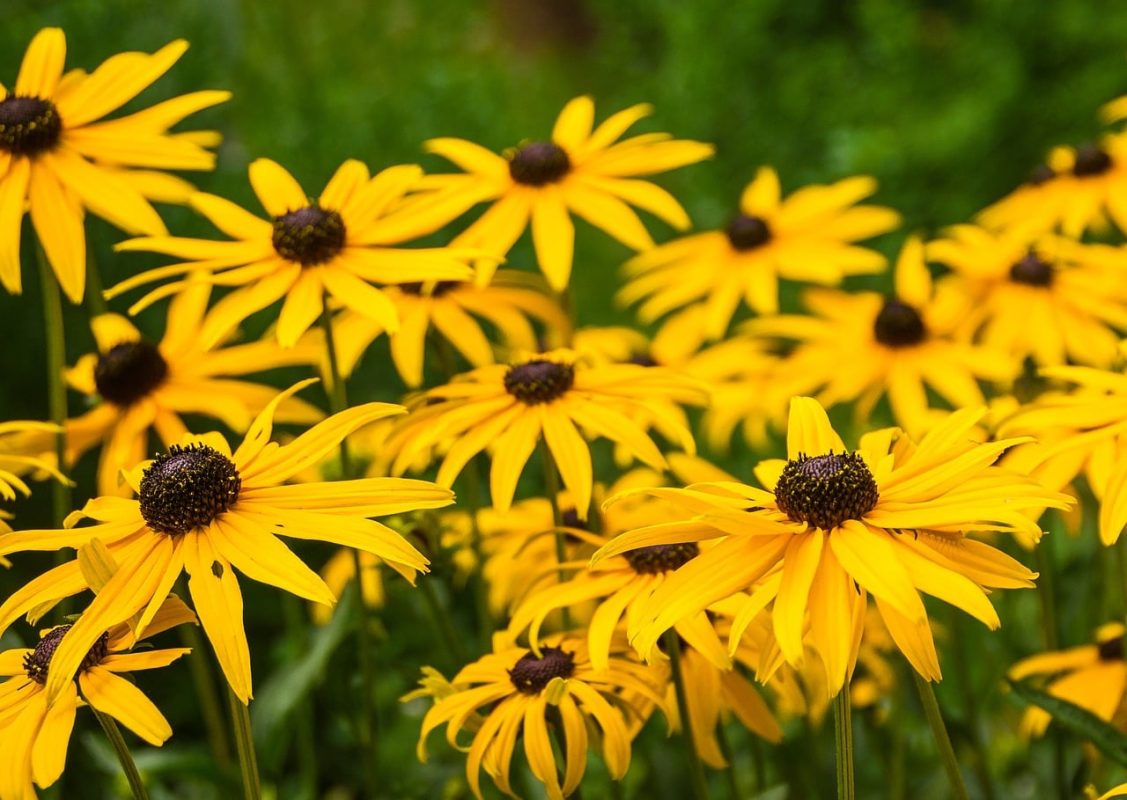
3. Rudbeckia
Commonly known as Black-Eyed Susan, Rudbeckia brings cheerful golden-yellow flowers and dark centers to the late-summer and fall garden.
It’s a great choice for:
- Sunny perennial borders
- Pollinator gardens
- Naturalized plantings
- Cottage-style gardens
- Adding warm fall color
After flowering, consider leaving some seed heads standing. They add winter interest and may provide food for visiting birds.
4. Japanese Anemone
Japanese anemones bring something a little different to the fall garden. Their delicate flowers rise above attractive foliage on slender stems, creating an airy, graceful look.
Depending on the variety, flowers may be white or shades of pink.
They’re especially beautiful when planted in groups, where their tall flowers can sway above other perennials and add movement to the landscape.
5. Ornamental Grasses
Fall is when many ornamental grasses really begin to steal the show.
Graceful foliage and feathery seed heads bring movement, texture, and height to the landscape. As the season progresses, many grasses develop beautiful golden, bronze, or reddish tones.
Ornamental grasses pair beautifully with asters, sedum, and Rudbeckia for a classic fall combination.
Better yet, leave them standing through winter for structure, movement, and wildlife habitat.
Create Layers of Fall Color
The most interesting fall gardens aren’t dependent on a single plant.
Combine different heights, flower shapes, foliage, and textures. Try pairing the bold flower clusters of sedum with delicate asters, golden Rudbeckia, graceful anemones, and flowing ornamental grasses.
You’ll create a garden that feels full and colorful while providing plenty of interest as the seasons change.
Don’t Forget the Pollinators
Fall-blooming perennials aren’t just beautiful. They can also provide valuable nectar and pollen when fewer flowers are available.
Adding a variety of late-season flowers can help keep bees, butterflies, and other beneficial insects visiting your garden well into fall.
Plant Now for Future Fall Color
Fall is also a great time to notice where your landscape could use more late-season interest.
Look for areas that become bare or lose color as summer ends. Adding fall-performing perennials now can help create a garden with a longer season of flowers, foliage, and texture for years to come.
Frequently Asked Questions
What perennials provide color in fall?
Sedum, asters, Rudbeckia, Japanese anemones, and ornamental grasses are excellent choices for adding late-season interest.
Are fall-blooming perennials good for pollinators?
Many are. Asters, sedum, and Rudbeckia can provide valuable late-season food for bees, butterflies, and other pollinators.
Should I cut these perennials back in fall?
Not necessarily. Seed heads and ornamental grasses can provide winter interest, food for birds, and habitat for beneficial insects.
Can I plant perennials in fall in Massachusetts?
Yes. Fall can be a good time to establish many perennials while temperatures are cooler and soil remains warm.
Do ornamental grasses need to be cut back before winter?
Most can remain standing through winter and be cut back in late winter or early spring before new growth begins.
Visit Fran’s Flowers
Ready to bring more color and texture to your fall garden? Stop by Fran’s Flowers to explore beautiful perennials and seasonal plants for your Massachusetts landscape. Selection can vary throughout the season, so see what’s looking its best when you visit.
Fran’s Flowers
1 Worcester Road
Framingham, MA 01701
Between Kohl’s and Route 9
Fall Hours
Monday to Saturday: 9 AM to 8 PM
Sunday and Holidays: 9 AM to 6 PM